
Commercial Video · Production guide · Egypt
Combining photography and video can give a brand a coherent visual library, but it requires a production plan that recognizes their different needs. A scene suitable for a still photograph may need additional movement, sound or coverage for an edit. Shared styling and locations help, but they do not eliminate the work required by each format.
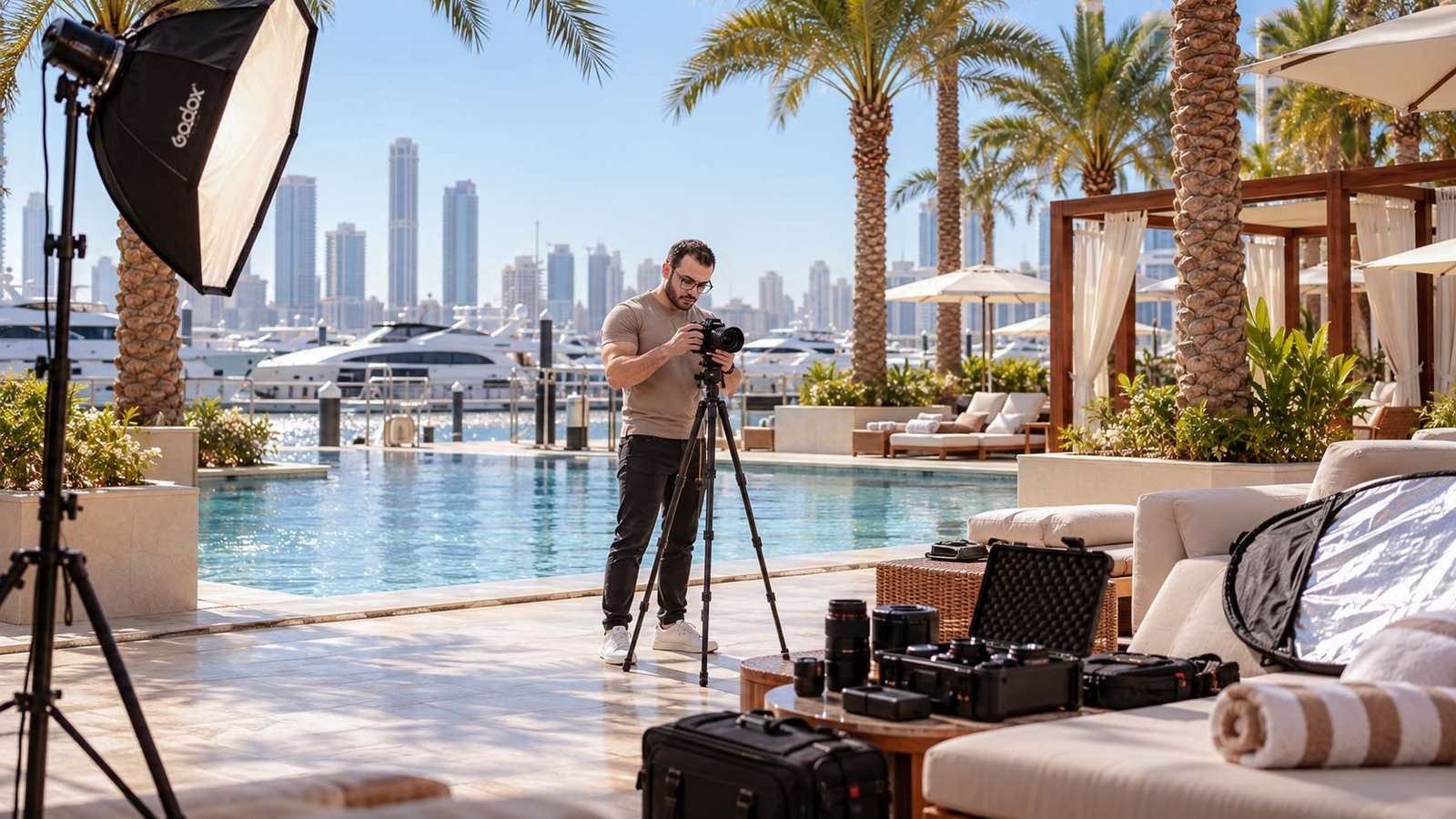
Define separate outputs within one brief
List the finished photographs and video edits independently. Explain where each will appear and which messages they need to communicate. Identify shared scenes as well as format-specific requirements. This makes it easier to estimate the actual scope and prevents one team from assuming that the other format can be captured casually in spare moments.
Plan the sequence around readiness
Use the set, styling and participants efficiently while allowing time for changes. A food dish, room or product may need to be presented differently for movement and still capture. Decide which format takes priority when freshness, daylight or access creates a narrow window. The sequence should reflect those constraints rather than treating every location as an unlimited opportunity.
If sound recording is needed, identify an appropriate place and period for it. A visually busy production area may not provide the conditions required for a clear interview or spoken message.
Match the crew to the work
Ask the provider how the proposed crew will cover both formats. The right arrangement depends on the scope, equipment, sound and number of simultaneous requirements. Avoid assuming that one person can capture every essential still and moving sequence at the same instant. Clear responsibilities help protect the quality of both deliverable sets.
Coordinate selection and finishing
Agree how still-image selection, video feedback and brand approvals will work. Keep colours and visual direction consistent without forcing moving footage and photographs to look technically identical. Organize final files by use and format. A combined production succeeds when it delivers complete, usable assets for both needs, not merely evidence that two capture modes were switched on during the day.
Before you request a proposal
- Separate photograph and video deliverable lists
- Shared scenes and format-specific requirements
- Priority decisions for limited access or light
- Defined crew roles, selection and review processes
Is a combined shoot always more efficient?
It can reduce repeated preparation, but only when the schedule and scope are realistic. Complex scenes or demanding simultaneous requirements may need more crew or separate sessions to achieve the intended result.
Explore the commercial video production enquiry page for relevant work and a project enquiry.
Related planning guides
- How to Give Clear Feedback on a Commercial Video Edit
- Commercial Video Deliverables: Website Films, Reels and Presentation Versions
Plan your next production
Share your location, preferred dates, intended usage and required photographs or videos. Karim Hamdy is based in Cairo and works on location across Egypt and the Middle East.
About the business: Karim Hamdy, commercial photographer and videographer based in Cairo, Egypt.